Teleprompters
Do you need a teleprompter? Four problems, one answer each.
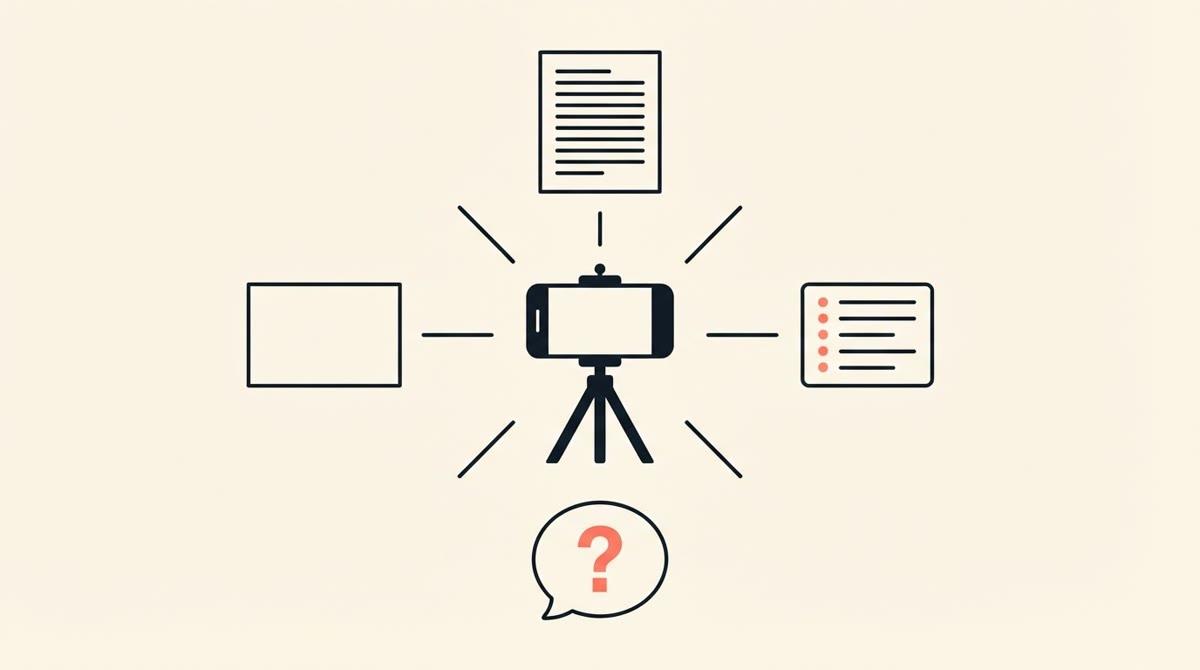
A teleprompter does one job. It puts words you've already written in front of your eyes. If you don't have the words yet, it's a blank page with a nice scroll.
People reach for one for four different reasons, and only one of them is a prompter problem. Find yours below, or take the six-question quiz.
| Your situation | What it sounds like | What to use |
|---|---|---|
| You have a script | "I wrote it. I can't memorise it." | A teleprompter |
| You have a rough idea | "I know the point. The words fall apart." | Questions to answer |
| You have bullet points | "I lose my place and restart." | Notes by the lens |
| You have no topic | "I don't know what to say." | One client question |
1. You have a script and need to see it
This is the real prompter problem. The words are good and you won't memorise three minutes of them. Get a prompter, put the text beside the lens and keep the column narrow. Here are the steps.
2. You have an idea but not the words
You know what you want to say. When you try, the opening is wrong, the middle wanders and you delete the take. A script stops the wandering, then hands you a new problem: reading it.
What works here is being asked something. One question, you answer out loud, and the answer is your paragraph. It's how you'd explain the thing to a client who asked.
3. You need notes, not a script
Five bullets, five words each, taped next to the lens. You fill in the sentences as you go. It's quicker than a script and it sounds like you. The price is a few extra takes and some jump cuts.
If the bullets keep turning into a ramble, and the ramble into twelve takes, what's missing is a question to answer. A bigger screen won't help.
4. You don't have a topic yet
Then the tool isn't the problem. Take the question a client asked you twice this week and answer it on camera. A prompter would happily let you read nothing, in perfect eyeline.
What a prompter costs you
- Your eyes move left to right. That sweep is the most common sign that you are reading.
- Your delivery flattens, because the words come from the page, not from the thought.
- The scroll sets your pace, so you end up chasing it or waiting for it.
Setup and practice fix most of that, and plenty of people do just that. What a prompter does to your delivery goes through what people report, and what nobody has measured.
If video helps you win clients
The videos that matter for a coach, consultant or course creator are rarely a polished three-minute script. They're the weekly update, the answer every prospect asks for, the module intro. You've said all of it out loud many times.
For those, a script is one more step. Answering a question you already know costs less than drafting, rehearsing and reading it.
Where MakiRoll fits
MakiRoll isn't a teleprompter. It asks you one question at a time while the camera records, and picks the next from what you just said. Your own face is off the screen by default, so you're answering someone, not watching yourself. It finds your strongest takes and you approve the cut.
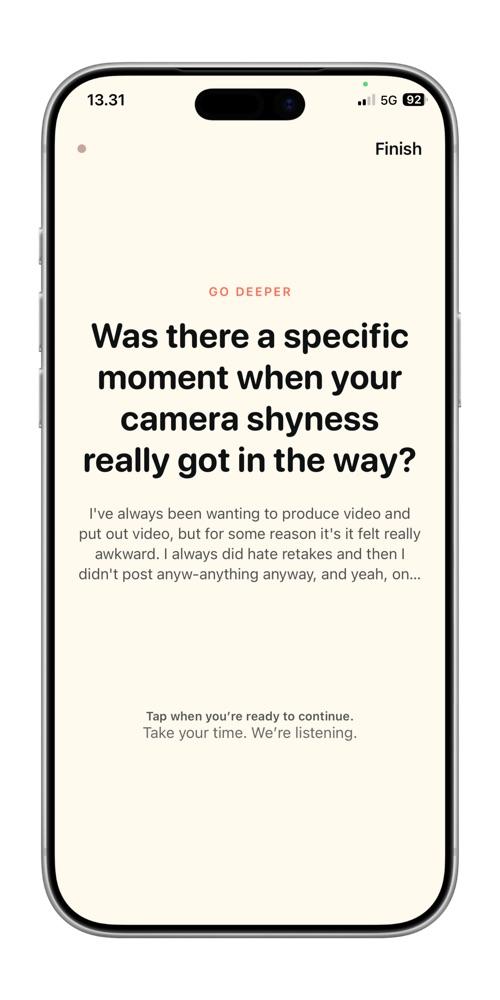
If you already wrote the script, Prompter mode shows it one line at a time. Use it if it helps. But if you searched for a teleprompter because the words keep falling apart, a better prompter won't fix that.
Quick answers
- Do I need a teleprompter?
- Only if you already have a finished script and want it in front of your eyes while you record. If you have bullets, a rough idea or no topic yet, a prompter won't fix it. Notes, questions to answer or a topic will.
- What if I have a script and still sound stiff?
- That's a setup and delivery problem, not a reason to drop the script. Move the text next to the lens, narrow the column, slow the scroll and rehearse once. If it still sounds read, turn each heading into a question and answer it out loud.
- Is MakiRoll a teleprompter?
- No. MakiRoll asks you questions while the camera records, so you answer instead of read. If you do have a script, its Prompter mode shows it one line at a time.
Try it instead of a script
MakiRoll asks you questions while the camera records, finds your strongest takes, and exports the cut you approve. Three videos free, no card.
Start recordingKeep reading
What a teleprompter does to your delivery
A prompter removes memorising and adds reading, and reading is its own skill. What people report, what the setup guides admit, and what nobody has measured.
How to use a teleprompter, step by step
Put the text next to the lens, keep the lines short, scroll at your speaking pace, rehearse once and record in sections. Seven steps, with the numbers behind them.